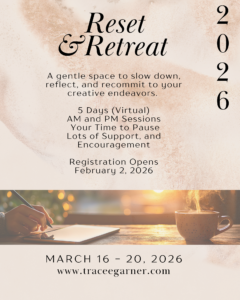
Winter has a way of pressing in on us. For me, it presses in, sideways, over my head and under my feet. It’s the devil. Just kidding. It’s a necessary cycle of course so we appreciate the longer days as for right now at least, they are painfully shorter, and the light drains away earlier than we want, and my personal energy bank, shows a barely half full battery pic. It never seems to fill up during this time.
The problem is we don’t get a break, myself included, these months bring on a heavy mix of Seasonal Affective Disorder (SAD), winter blues, or just a general sense of “I’m moving through molasses,” or “I’m getting absolutely nothing done.”
Over the years, I trialed and error’d through a number of creative ways to cope with the “winter” part of our seasons and this has been to find and focus myself and energy on a simple but powerful project. For the last few years, the right kind of project — has carried me through the heaviness and helped me emerge into spring feeling mentally ready, dare I say excited and emotionally alert, dare I say, a little more like myself.
Here’s some ways to do that for yourself and some thoughts to keep in mind. First, it’s doesn’t have to be a huge project.
Not one that feels like work.
Not a year-long overhaul of your life.
I’m talking about a short-term, enjoyable, soul-feeding project that gives your mind something hopeful to hold onto during the grayest stretch of the year.
Here’s why it works — and how to choose the right kind of winter project for yourself. In fact, if you have family, give yourself a project (personal) and then find something to work on as a family.
First, Choose a Project That’s Fun (yes, really)
When winter dips your mood, the last thing you need is a project that feels like another problem or obligation.
Pick something that sparks joy, curiosity, or play.
Some ideas:
-
Starting a small scrapbook or memory journal (to help it have an end, choose a theme, e.g. all vacations, or a time period, the last five years or just the last year)
-
Creating a mood board or vision board for spring
-
Rearranging a corner of your home
-
Learning one small creative skill (like using Canva, making simple art, or sampling new recipes)
-
Writing short poems, flash snippets, or journaling your way through a list of prompts
Fun is the priority.
Structure is helpful — but joy is what keeps you engaged.
Second, Please Keep It Short… but Not Too Short
This is the best part. YOU KNOW IT ENDS and that creates a sense of yay, I don’t have to do this forever, right?
If the project is too long, your brain will dread it.
If it’s too short, you’ll end up staring at the calendar again wondering why winter isn’t over yet.
Aim for a project that lasts 3–8 weeks. That’s long enough to hold your attention through the height of winter.
Short enough to feel doable.
Next, Do the Fun Parts During the Darkest Weeks
January and February can be tough — emotionally, mentally, physically. That’s why you save the fun of your project for these exact weeks.
Think of it as your internal “winter shield.” Winter may take your sunlight, but your project gives you something bright, colorful, and energizing to lean into:
-
decorating your planner
-
taking on a small home refresh
-
starting a new mini writing challenge or joining a writing group and not abandoning it after two meetings? um, might be a personal problem.
-
taking photos or creating a personal gallery
-
reorganizing your vanity, workspace, or digital life
By the time the days start lengthening, you’re already in motion, mentally lighter, and emotionally warmed up for whatever comes next.
Fourth, Let Your Project Prepare You For (maybe even usher in,) Spring
A good winter project doesn’t just get you through the season — depending on what you choose, it could set you up for the next one.
That means:
- you’re not scrambling to “find energy” in March
- you feel more organized , maybe even ahead, and harness that momentum for the “next” thing
- you’ve already built momentum, little by little
- you enter spring with something completed — and that builds confidence
5. Choose Something That Feels Like a Treat — Not a Task
One of the most important winter mental-health principles is this:
Your project should feel like a gift to yourself.
Not something you have to force out or feel obligated to do
Not something you “should” be doing because this is the season or time
Not something tied to productivity or pressure
Let it feel small, private, nourishing. Maybe even keep it a secret if you and later you can be like “ta da”
6. Finally, Give Yourself Permission to Enjoy the Process and This Time
Winter has enough heaviness in it already. Your project shouldn’t add more.
Release perfection.
Release expectations.
Release the idea that you must “finish” perfectly.
The only point in all of this is focusing on what isn’t happening outside, the deadness and the dark and grey winter implies. You’re working on something, even if it’s tinkering, fixing, overturning oil soil for something coming. This is about movement, stimulation, small sparks of joy, and giving yourself something for a time.
A Winter Project Doesn’t Save the Season, and It Doesn’t Have to Be Filled With Spring-ish Activity
When the world feels not only chaotic but frigid and dim, so many of us need something to remind us we’re still growing, still capable, and still engaged. I mean how many cups of tea can we sip.
A short, fun, meaningful winter project can help us all along.
It keeps your mind engaged, your creativity moving, and your heart hopeful.
So if you’re feeling the SAD parts creeping in, start small:
Pick a project.
Give it a timeline.
Do the joyful pieces during the dark weeks.
And let it gently walk you toward spring without your mind idling waiting for it to show up. Stay busy, project focused and the season will change and you’ll be ready.