
How I Got to the Finish Line of my 21st Book, Smoking Confessions
Writing my 21st book, Smoking Confessions nearly made me want to abandon the very thing that had saved me countless times in my 25 years of publishing. It’s almost as if this story said, new book level, new devil.”
This book, the characters and the FIXING of the story line- (it’s the final book- in a four-book series) -tested me in ways I never imagined and took over two years of my life to bring from idea to final pages. I’ll be honest: I struggled. There were days I doubted myself, nights I wanted to give up, and mornings where the thought of not opening the manuscript seemed fine with me.
But here’s the thing: I didn’t quit. I am a person with a disability, I seem to have a preexisting condition called, “never quit.” I knew I wouldn’t give up, but I didn’t know if I’d shelve it. Shelving it gives me a “not right now” hall pass to move on. But I didn’t. So what’s a girl to do, or better, here’s what you can do if you’re in the middle of your own project and wondering how you’ll ever be able to write: “The End,” I want to share some lessons that helped me stick with it—even when editing felt endless and doubt felt heavier than my motivation.
- Snip, Snip, Snip to Make It Better
Editing is not for the faint of heart. If you want to make your story shine, you must be willing to cut, move, rearrange, and reshape. Heavy on the cutting part btw. Think of it like pruning a tree but a large tree in the dessert and until you do it, you can’t have any water. Okay, that’s dramatic but that’s how it feels. Yes, it MAY look painful to snip away branches, but you’re making room for growth, you’re not cutting as much as you are clearing dead, needless prose and refining for clarity which let’s be clear, increases enjoyment (and more positive reviews for potential readers to write). If it’s still hard to understand pruning look at it from a care standpoint. You deserve care. If you have children, they deserve care. You don’t send them out of the house for their first day of school looking crazy. Why? Because they won’t survive the bullies. What you produce even on the page, deserves that same attention, and care.
- Embrace the “Red” Ink
Be real, most of us are no longer using red pen ink in our editing because we’ve been traumatized by some overzealous editor (or teacher really) in our past, earlier work. All those comments and corrections? They’re not an attack. I use red first in my printed pass throughs. For this one you gotta think like a millennial who have essentially taken all of our bad and derogatory words of the 70’s and 80’s, and reframed them, owned them and used them from an empowering standpoint. We need to catch a case of that and reframe our thoughts on the voluminous number of comments we receive and half of it is just a little punctuation and grammar issues, those don’t even count unless you wrote or contributed to the MLA or APA style books. Then, okay, yes you should probably do the walk of shame. Just saying. The questions editors pose are the very ones we should have thought of already or are a simple note to tell you, hey something’s missing here. A good editor doesn’t just point out problems—they also highlight what’s working. In fact, I had two rounds of edits from two different editors, and both sprinkled in positivity alongside their critique, but I noticed only this if I wasn’t holding a visual of my choking their neck in my head. The positives are there, ask yourself if you’re even looking. Those little smiley faces and encouraging reactions, much like a reader, meant a lot in the middle of tough rewrites and as I solved the issues they highlighted, I looked for more subtle comments of encouragement which motivated me to the finish line.
- Edit in Small Chunks
One of your mistakes and my own, may be trying to not so much edit it all, but to stop thinking about it all as one ginormous tome. To do so is not just overwhelming, you’re doing that in one sitting, is suicidal and unrealistic. I have a little trick where I turn every other chapter sideways. I take one chapter off the top and usually at my writing desk or in another desk, I’ll go through it with the comments up on the screen. Soon that stack is way down and I’ll have just a few chapters left. Watching what seemed so large and unwieldy dwindle, is visually motivating. Everyday you’re further and further along. Editing is exhausting work, and you need to pace yourself. Take it one chunk at a time, with breaks and resets in between. A little progress every day is still progress.
- Read Every Comment (Even the Tough Ones). Stop. Ponder.
Don’t skim. I have found that skimming makes the brain work harder. It doesn’t have the full concept of whatever the editor said because you got a glimpse and not the full context. How is that fixable? Read everything your editor gives you, even if it stings at first run through: reading only. Often, even when you step away from your manuscript, your brain will keep working in the background with your subconscious. I now know that my brain seeks to “solving” a problem scene in my head while doing something totally unrelated. By the time I pulled back up, the solution appeared and it was on.
- Don’t Procrastinate
The longer you avoid your edits, the heavier and more insurmountable the project feels. Your brain seems to go on a “here’s more problems tour de force.” It conjures more problems than there are simply because you won’t deal with the reality. Open the file, or pull out the stack, take just 10-20 pages 1-2 chapters of the chunk off the top, face the notes, and read. I recommend reading aloud every time you go over the manuscript. Mistakes, for me at least, are much clearer when the mouth and brain stumble aloud over them. Everything stands out in a read aloud. You can’t avoid what you hear your own mouth saying (or trying to). It will trick you into fixing it. Try it.
- Remember: It’s About the Work, and Permit Yourself Grief
Your characters may feel like your heart on the page (and they are). You’ve poured your blood, sweat, and tears into them, even more so if it’s a series. You wrote the families before and after that book, and you know them well. If it’s the fourth book like me, you’re hard pressed to say goodbye. Deal with that too, don’t forget you did that and the emotion you put on the page is from your own lived experiences, highs and lows. Permit yourself your feelings whatever they are. I usually have a good cry when my books are complete. It’s part of my process.
At the end of the day, take your ego needs out of it. This is about your work, a product to be consumed, you hope greatly, by the mass public. Not only did I have to let go of the fear of this final (for now) book but to get over oneself, reminding myself that this is my love and it loves me back. It’s a wonderful endeavor to write, it takes courage and grit and sticktoitiveness and we do that however long it takes, never abandoning the work, or our desire to put forth a work of quality.
Final Thoughts
Smoking Confessions stretched me to my limits. But it also reminded me why I write: to share stories that matter, to connect, to bring something real into the world and share a little bit of my heart.
So if you’re in the messy middle of editing right now, or any part of the process thats difficult for you, I want to encourage you—don’t give up. Take it piece by piece, listen to your editors, and remember why you started. You’ll get there. And when you do, the finish line will be worth every difficult mile.
More writer tips? See my Books for Writer’s Series, here.
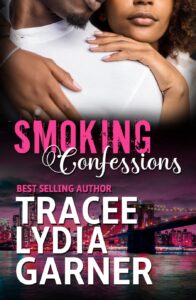
Tracee’s new book Smoking Confessions her 21st book overall and book 4 in the Parker Brother’s Series, is available in ebook, print and AI audio where books are sold. Visit Amazon or Barnes and Noble to learn more